

An appraisal can inform your decision, but it doesn’t set a buyer’s offer. To understand how to value your jewelry before selling in Houston, we recommend considering metal purity and weight, current gold prices, and, for diamond pieces, the stones’ characteristics. Pure gold is 24K; 14K and 18K gold contain other metals.
It’s reasonable to want a clear basis for an offer, especially for an engagement ring or diamond jewelry. An appraisal can provide useful documentation, while a buyer’s offer reflects an evaluation of the item being sold. Receipts and gemstone certificates can help explain a piece’s history and details, but they’re only part of the picture.
This guide explains what on-site testing can show, how to prepare receipts and certificates, and which diamond details matter. It also covers how to compare offers thoughtfully, including when one differs sharply from another, so you can make a more informed decision before selling.
Key Takeaways
- Watch how testing and weighing are explained during an on-site evaluation so you can understand what affects an offer.
- Bring receipts and gemstone certificates to provide useful details about a piece’s purchase and stones.
- For diamond jewelry and engagement rings, learn how color, clarity, and other characteristics can shape an offer.
- Compare the factors behind resale estimates, including current metal prices, condition, and whether pieces form a matching set.
On-site evaluation using testing equipment
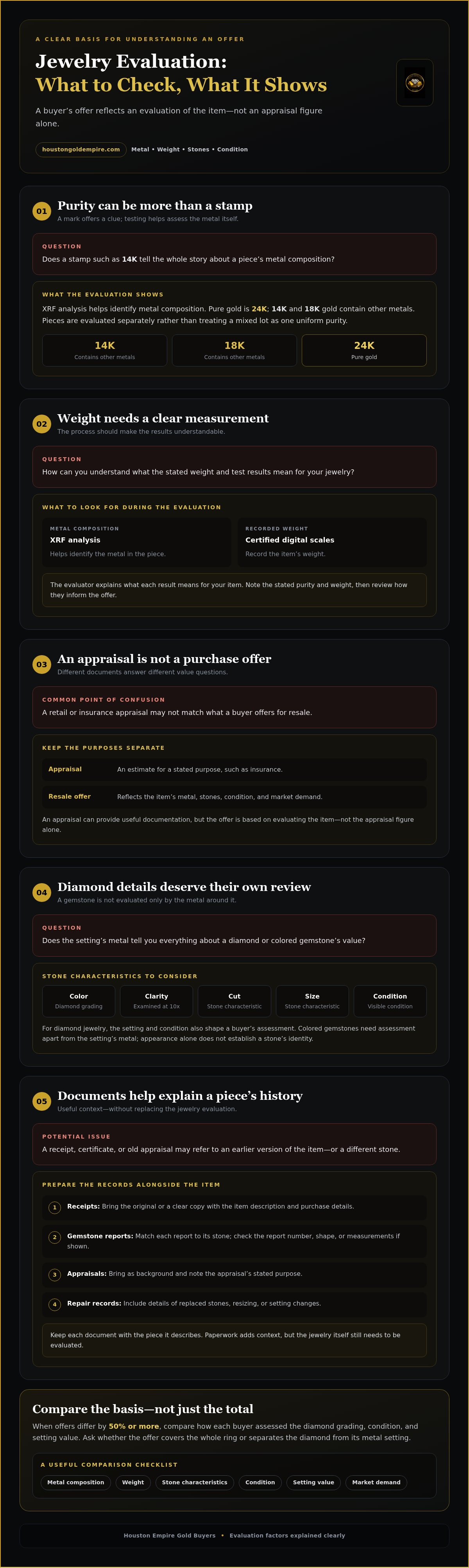
To understand how to value your jewelry before selling in Houston, start with materials, weight, and condition. During our on-site evaluation, we test metal composition and weigh each piece, giving you a clear basis for discussing an offer. Pure gold is 24K; 14K and 18K gold contain other metals.
To see how gold value is assessed, watch this video:
We use XRF analysis to help identify metal composition and certified digital scales to record weight. We explain what each result means for your item. A stamp such as 14K offers a clue, while testing helps assess the metal itself. We evaluate pieces separately rather than treating a mixed jewelry lot as one uniform purity.
An appointment can give you time to lay out items and discuss our evaluation. Before visiting, sort pieces by type and bring related receipts or gemstone certificates. During the visit, watch the tests, note the stated purity and weight, and review the offer before deciding. Ask how payment follows acceptance; an appointment alone doesn’t guarantee an offer or payment.
Colored gemstones need assessment apart from the setting’s metal. A stone’s color, clarity, cut, size, and visible condition can all be considered. For example, a blue stone’s appearance alone doesn’t establish whether it’s a natural sapphire, a treated gem, or another material. Ask which observations support its identification and whether it is evaluated separately from the setting.
An appraisal and a purchase offer serve different purposes. A retail or insurance appraisal isn’t the same as a resale offer, which reflects the item’s metal, stones, condition, and market demand. There’s no single typical percentage of retail or appraised value that buyers pay. Our offer is based on the item’s evaluation, not an appraisal figure alone.
For an independent jewelry appraisal in Houston, choose an appraiser separate from the purchase decision. Fees depend on the item and appraisal scope, so request a quote before booking. An independent written assessment can help you understand the piece; our on-site evaluation provides a basis for considering a sale.
Documents to bring, including gemstone certificates and receipts
Paperwork gives useful context that a visual inspection alone can’t provide. Bring the original receipt, gemstone certificate or grading report, and any previous appraisal. Keep each document with the piece it describes. A receipt may show the seller, purchase date, item description, and original setting details. These records help explain a piece’s history and distinguish it from similar-looking jewelry.
For a diamond ring, match its certificate to the stone before visiting. Check the report number, if shown, and compare the listed shape or measurements with the diamond. A certificate records gem characteristics, but it doesn’t determine the purchase offer. A receipt records an earlier purchase, not the item’s current resale value. Bring the report even if you’re unsure it matches.
- Receipts: Bring the original or a clear copy showing the item description and purchase details. We can compare those details with the jewelry.
- Gemstone reports: Pair each report with its matching stone, especially for a loose diamond or engagement ring.
- Appraisals: Bring a previous appraisal as background. We’ll consider its stated purpose separately from a resale offer.
- Repair records: Include paperwork for a replaced stone, resized ring, or changed setting so we understand the item’s history.
Sort documents by item and flag any mismatch. For example, a receipt may describe a white-gold ring whose setting has since changed. Explain the update so the current piece can be assessed, rather than relying on outdated details. If a certificate describes a loose stone, identify which mounted diamond it belongs to. Pairing records clearly makes the review more efficient.
Bring copies when possible and keep important originals secure. Packaging and purchase paperwork can support a piece’s history, but the jewelry itself still needs to be evaluated. Group each item with its related records, then point out details that may affect identification. This preparation helps the evaluator review the documents alongside the right piece and explain how they inform the evaluation.
Selling diamond jewelry and engagement rings
Diamond offers reflect the stone, setting, condition, and buyer’s resale market. Consider those factors separately when comparing evaluations.
Appraisal, Fair Market, and Resale Values
An appraisal estimates jewelry’s value for a stated purpose, such as insurance. Fair market value estimates a potential exchange between informed parties; resale value reflects what a buyer offers to purchase the piece. These figures can differ, so check the appraisal’s purpose and compare each offer’s stated basis.
For diamonds, color is graded from D, colorless, to Z, light yellow or brown. Clarity is examined under 10x magnification. D-F colorless diamonds command premium prices, while G-J near-colorless stones can offer excellent value. Cut, condition, and setting also shape a buyer’s assessment.
Comparing Local, Pawn, and Online Buyers
Houston jewelry buyers and pawn shops can assess a ring in person; online buyers may rely on submitted details or shipped items. Compare the inspection process, how the diamond is evaluated, and the written offer terms. Ask whether the offer covers the whole ring or separates the diamond from its metal setting.
Offers that differ by 50% or more deserve careful comparison. Ask each buyer to explain differences in diamond grading, condition, and setting value. For an engagement ring, bring its certificate and note any replaced or missing stones. Compare like with like, not just the final totals.
A buyer’s offer and an appraisal are valuation documents, not tax determinations. Keep sale and purchase records so a tax professional can assess your circumstances under applicable Texas or Houston requirements.
How can I estimate the resale value of jewelry before selling?
Start with the factors that shape a buyer’s estimate: metal purity, item weight, and current market prices. Gold prices fluctuate daily, so check current prices on the day you plan to compare offers. This provides a reference point, not a guaranteed sale amount. These steps can help you understand how to value your jewelry before selling in Houston.
Separate pieces by metal and type before estimating. A gold chain and a sterling silver necklace need different market references. For gold, note the karat mark and weigh the piece if you have a suitable scale. A buyer’s testing and weighing can refine your estimate by verifying the metal and its weight.
- Check the market: Look up the current gold price, then remember that jewelry value depends on purity and weight.
- Assess condition: Note visible damage, missing stones, or a broken clasp, which can affect how a piece is evaluated.
- Group related pieces: A matching jewelry set, original packaging, and pristine condition can increase resale value.
- Identify the maker: A signed sterling silver necklace from Tiffany may be more valuable than an unbranded gold chain of similar weight.
Brand, design, and completeness can affect how buyers view a piece. Keep signed items together with their boxes or matching earrings. Don’t assume metal weight alone explains an offer, especially for designer jewelry or coordinated sets. Record each item’s details so you can compare evaluations on the same basis.
Houston sellers can get estimates from multiple stores to compare potential offers. Share the same item details and documents each time, then ask what factors explain differences. Compare the stated metal assessment, condition, and any added value attributed to a maker or matching set. A clear comparison helps you weigh the offer against your own estimate.
Houston Empire Gold Buyers: Gold Jewelry (10k - 24k)
Houston Empire Gold Buyers can help when you’re ready to compare your research with an in-person offer. We evaluate gold jewelry from 10k through 24k, using testing equipment and certified digital scales to assess each item.
At Houston Empire Gold Buyers, we test items in front of you and explain how purity, weight, and real-time market pricing inform the evaluation. No middlemen or hidden fees. No pressure, no obligation to sell. We also buy gold coins and bullion, silver jewelry and bullion, and estate jewelry pieces.
Bring your receipts or gemstone documents if they relate to the pieces you’re selling. Our team can review them alongside the jewelry and explain the evaluation. If you accept an offer, we pay cash and charge no hidden fees.
Contact us or visit houstongoldempire.com to discuss your jewelry.
Choose Your Next Step With Confidence
A practical way to value your jewelry before selling in Houston is to set your priorities before deciding. Identify which pieces you’re ready to part with and which carry personal or family meaning. That distinction helps keep a financial choice separate from an emotional one.
For pieces you’re considering selling, focus on whether the evaluation gives you a clear basis for deciding. You can pause, review the information, and choose what feels right for your circumstances. Selling doesn’t have to mean letting go of every item at once. Keep your options open and make the decision piece by piece.
When you’re ready, visit Houston Empire Gold Buyers for an in-person evaluation. Walk-ins are always welcome. Private appointments available. Our team can explain the evaluation so you can decide with clarity and care.
Take the next step at your own pace. A thoughtful decision is a good one.
Frequently Asked Questions
Are jewelry appraisals worth it before selling jewelry?
An appraisal can be useful when you need a documented opinion for insurance, inheritance, or a complex piece. It isn’t the same as a buyer’s offer, so consider whether you need documentation or a sale estimate. For a straightforward gold chain, a buyer’s inspection may answer practical selling questions. For an inherited ring with diamonds, an appraisal may help clarify what you own.
What Makes Jewelry Valuable Beyond Materials?
Craftsmanship, design, maker, completeness, and condition can affect interest beyond the metal or stones. Look for a maker’s mark inside a ring or on a clasp, and keep matching components together. A signed piece or a complete vintage set may attract different interest than a damaged, unbranded item. These details help explain why two pieces with similar materials may receive different evaluations.
What types of jewelry items can be appraised?
Appraisals can cover rings, necklaces, bracelets, earrings, watches, and estate pieces. The right scope depends on the item: a diamond engagement ring may need attention to both its center stone and setting, while a broken gold chain focuses more on its metal. In Houston, organize pieces by type and note which are inherited, signed, damaged, or part of a set.
How do gold purity, weight, and current gold prices affect jewelry value?
Purity indicates how much of a gold item is gold, while weight helps establish the amount of metal present. Current gold prices move daily, so an estimate can change with the market. A practical comparison separates the gold component from stones or design features. For example, a lightweight 14K pendant and a heavier piece of the same purity contain different amounts of gold.
How are diamonds and gemstones graded and valued for resale?
Diamond assessments consider characteristics such as color, clarity, cut, and weight; colored stones also require identification and condition review. Treatments or visible damage can affect how a gem is considered. Bring a report that matches the specific stone, and point out any chips, replacements, or loose settings. A certificate provides details, but a resale offer also reflects buyer demand and the piece’s overall condition.
What documents or certificates should I bring when selling jewelry in Houston?
Bring any gemstone grading report, original receipt, prior appraisal, and repair records related to the items. Match each report to its stone, especially if you have several similar rings or loose diamonds. For inherited jewelry, include records that help identify the pieces or their history. Keep paperwork grouped by item so the Houston evaluator can review the right information alongside each piece.


