

Gold bullion value depends on the live market price, the item’s precious-metal content, and its weight. Coins, rounds, and bars may also carry different premiums because buyers value their form and resale appeal differently. Understanding how each product is assessed helps you compare its metal value with its potential market value.
The spot price is a starting point, not the whole answer. An offer can depend on purity, weight, condition, and any value beyond the metal itself. Knowing what affects the calculation helps you compare offers and understand what is being evaluated.
This guide explains what influences gold and silver prices, how dealer premiums differ, and what to consider about coins, rounds, and bars. You’ll also learn what to expect when selling bullion in Houston and how a transparent evaluation can help you make an informed decision.
Key Takeaways
- Compare an item’s metal content and weight with the live market price to understand what drives its value.
- Learn why coins, rounds, and bars can carry different premiums, and how mint and format affect your comparison.
- Weigh the convenience of physical precious metals against price fluctuations and the costs built into buying and selling.
- See how Houston Empire Gold Buyers evaluates eligible items transparently, so you can make an informed decision about selling.
Comparing bullion prices and dealer premiums
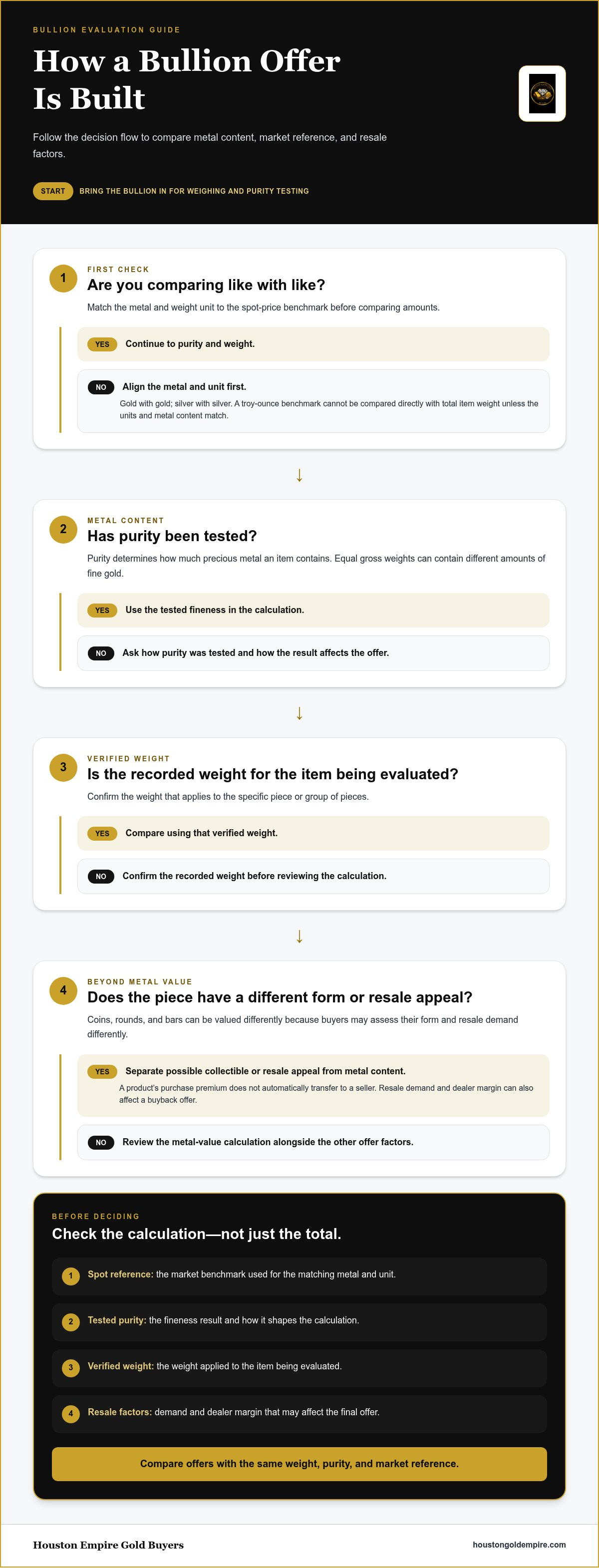
To sell bullion, bring the item in for weighing and purity testing, then review the offer before deciding. Buyers commonly consider verified metal weight, fineness, the current spot benchmark, resale demand, and their margin. Ask how these factors shape the offer so you can understand the proposed amount.
Spot price is a benchmark for a specific amount of metal. Compare like with like: gold with gold, silver with silver, and the same weight unit. A troy-ounce benchmark cannot be compared directly with an item’s total weight unless the units and metal content match. This is especially important when a group includes different sizes or forms.
Purity determines how much precious metal an item contains. Two gold pieces with the same gross weight can hold different amounts of fine gold if their fineness differs. Ask how purity was tested and how the result affects the calculation. Confirm that the recorded weight applies to the item being evaluated.
A premium is the amount added above underlying metal value when buying a finished product. An American gold coin may carry a different retail premium from a plain bar. That purchase premium doesn’t automatically transfer to a seller. Resale demand and the dealer’s margin also affect a buyback offer for bullion.
- Compare offers using the same weight, purity, and market reference.
- Separate possible collectible appeal from the item’s metal content.
- Ask for the spot reference, tested purity, and verified weight.
Inflation expectations and the dollar can influence investor interest in precious metals. According to the Board of Governors of the Federal Reserve System, the Federal Reserve’s inflation target is 2%. That target provides economic context, but it doesn’t determine an individual dealer’s offer.
The final offer depends on weight, fineness, market conditions, and resale factors. Compare the calculation as well as the total to see how each factor shaped the amount.
Products from government and private mints
Government mints issue precious-metal coins, while private mints commonly produce bars and rounds. Markings can help identify a product’s type, maker, weight, and fineness. Check these details and keep any packaging with the matching piece. They help you compare metal content and resale appeal.
American Gold Eagles contain 91.67% gold, while American Gold Buffalo coins are 99.99% pure. South African Krugerrands also contain 91.67% gold. These examples show why a coin’s name alone doesn’t tell you its fine-gold content. Read the stated weight and purity together when assessing a coin or other minted bullion.
Other government-minted examples include Mexican Gold Libertads at 99.9% purity and Australian Gold Kangaroos made from 99.99% fine gold. Canadian Gold Maple Leaf coins come in sizes from 1/20 troy ounce to 1 troy ounce. Modern bullion coins generally have legal tender status and a nominal face value, though they don’t enter common circulation.
Private mints offer bars in varied sizes. Gold bars range from 1 gram to 1 kilogram, and Valcambi bars are available across that range. Smaller bars allow an owner to sell a portion without parting with a larger holding. Larger bars consolidate more metal in one piece, making accurate identification and weight especially important.
Compare the mint mark, metal, stated weight, and fineness before evaluating a piece. The LBMA Good Delivery standard sets minimum fineness at 99.5% for gold bars and 99.9% for silver bars. These standards provide context for minted products, while an individual bullion item is assessed by its own markings and verified metal content.
- Sort coins, rounds, and bars by type and record their marked weights.
- Keep packaging with the matching mint product when available.
- Compare items made from the same metal and measured in the same unit.
For a Houston sale, use the local bullion evaluation information to understand the next step for your minted pieces.
Bullion as an investment
Physical precious metals can add a tangible asset to a portfolio, but prices fluctuate and resale value matters. Before buying, consider your goal, time horizon, storage, and how you might sell.
Investment Considerations
When comparing a gold bar with silver bullion, consider the metal, weight, and ease of resale. A bar concentrates value in one item, while smaller pieces may allow partial sales. Neither format avoids exposure to changing market prices.
Consider the full transaction, not only the purchase premium. Buying and selling involve different offers, so the price paid may not match the amount received later. The reported plan by a major Japanese insurer to allocate $2.2 billion to gold on October 24, 2026, illustrates institutional interest, but it doesn’t establish what suits an individual investor.
Before committing, write down why you want to hold metal and what might lead you to sell. Keep records of purchase dates, costs, weights, and product details. These records help you track performance and support later tax calculations.
Bullion Taxes in the United States
U.S. sales-tax treatment for precious metals can vary by state and transaction. Check the rules that apply where the purchase takes place, and keep the receipt showing the item and amount paid.
Capital-gains tax relates to a gain when an asset sells for more than its tax basis. Purchase records help establish that basis, while the sale proceeds and applicable tax rules affect the calculation. Keep the sale confirmation with your original documentation.
For a practical record, note the metal type, product description, purchase cost, sale proceeds, and transaction dates. Document a gold bar and a silver coin separately. State tax treatment and federal reporting are distinct, so apply the relevant rules to each rather than assuming one answer covers both.
What types of bullion are available, such as gold, silver, platinum, and palladium?
Gold bullion comes as coins, rounds, and bars, with purity and weight varying by item. American Gold Eagles and Gold Buffalo coins are examples of government-minted products. A bar’s maker, markings, and stated fineness help identify its metal content. Check those details against the item before comparing or selling it.
Silver bullion also comes as coins, rounds, and bars. A coin may show a mint design and denomination, while a round typically carries a private-mint design. Bars come in different sizes, so record each piece’s marked weight separately. Condition and recognizable mint details can help distinguish products during evaluation.
Platinum is available in minted bars and coins, and palladium may also be held as bullion. Appearance alone does not establish a piece’s identity or purity. Keep original packaging with the matching item and note its markings. A buyer can assess its metal content and weight before calculating value.
To organize a mixed collection, sort pieces by metal first, then separate coins, rounds, and bars. Record each item’s maker, markings, stated weight, and condition. This clear inventory helps prevent gold or platinum from being grouped with silver. Set aside any item with a worn or unclear stamp for testing.
- Group gold, silver, platinum, and palladium separately.
- Keep coins, rounds, and bars in distinct groups.
- Record identifying marks and weights for each piece.
Compare your pieces through a Houston precious metals evaluation.
Houston Empire Gold Buyers: Gold Jewelry (10k - 24k)
Houston Empire Gold Buyers is Houston’s trusted number one local gold buyer for people ready to sell eligible precious metals. We purchase gold jewelry from 10k to 24k, gold coins and bullion, silver jewelry and bullion, and estate jewelry pieces.
Our transparent evaluations use live market pricing, XRF analysis, and certified digital scales. We test items in front of you, explain the results, and charge no hidden fees. If you’re considering a sale, bring your items and review the evaluation before deciding.
Contact Houston Empire Gold Buyers when you’re ready to discuss your bullion and take the next step.
Make Your Next Move With Confidence
Selling precious metals is a decision you can make on your own timeline. Decide whether you’re ready to sell everything, part of your holdings, or simply want to understand your options. Knowing your goal helps keep the evaluation focused on what matters to you.
If you’re considering selling bullion in Houston, bring your questions and the items you want evaluated. You can review the offer and decide whether it suits your plans. Take time to understand the evaluation before making a decision.
We provide straightforward, professional evaluations to help you consider your next step. Contact Houston Empire Gold Buyers when you’re ready to discuss your items.
Move forward at your own pace, with clear information to guide your decision.
Frequently Asked Questions
What Determines the Price of Gold?
Gold’s price reflects its market benchmark, fine-gold content, and investor demand. Weight and purity determine how much gold an item contains, while coins may also have collectible appeal. Two gold items with the same gross weight can have different metal values if their fineness differs. Currency movements and changing economic conditions can also influence the benchmark.
Which Size Gold Bar is Best?
The right gold bar size depends on how you plan to hold and sell your gold. Smaller bars let you sell a portion without parting with your entire holding. A larger bar may suit someone who prefers fewer pieces. Consider your budget, storage, and need for flexibility together. Compare the marked weight and fineness, then decide whether partial resale matters to you.
What does bullion mean?
Bullion means precious metal in a form valued mainly for its metal content and fineness. It commonly appears as bars, rounds, or coins. For example, a marked gold bar is assessed for its weight and purity, while a government-minted coin may also have a denomination and distinct design. The term describes the metal product, not a promise that its value will rise.
How are bullion prices determined, and what are current U.S. spot prices?
Spot prices are market benchmarks for metal, commonly quoted per troy ounce, and they change with market trading. These are reference values for the metals themselves, not a specific dealer’s offer for a particular coin, bar, or other item.
What is the difference between bullion coins, bars, and rounds?
Government mints issue coins, which typically show a denomination. Bars are shaped metal products often marked with weight and fineness. Rounds resemble coins but are privately minted and are not government-issued currency. For example, an American Gold Eagle is a coin, while a private mint’s circular silver piece is a round. The form affects identification and potential resale interest.
How do bullion premiums, spreads, and dealer fees affect the purchase price?
A premium is the amount added above the metal benchmark when buying a finished product. The spread is the difference between a buyer’s purchase and sale prices. Any fees can also affect the total amount paid. Compare the full purchase cost with the amount you might receive on resale, rather than judging a product by its premium alone. Premiums vary between products.


