

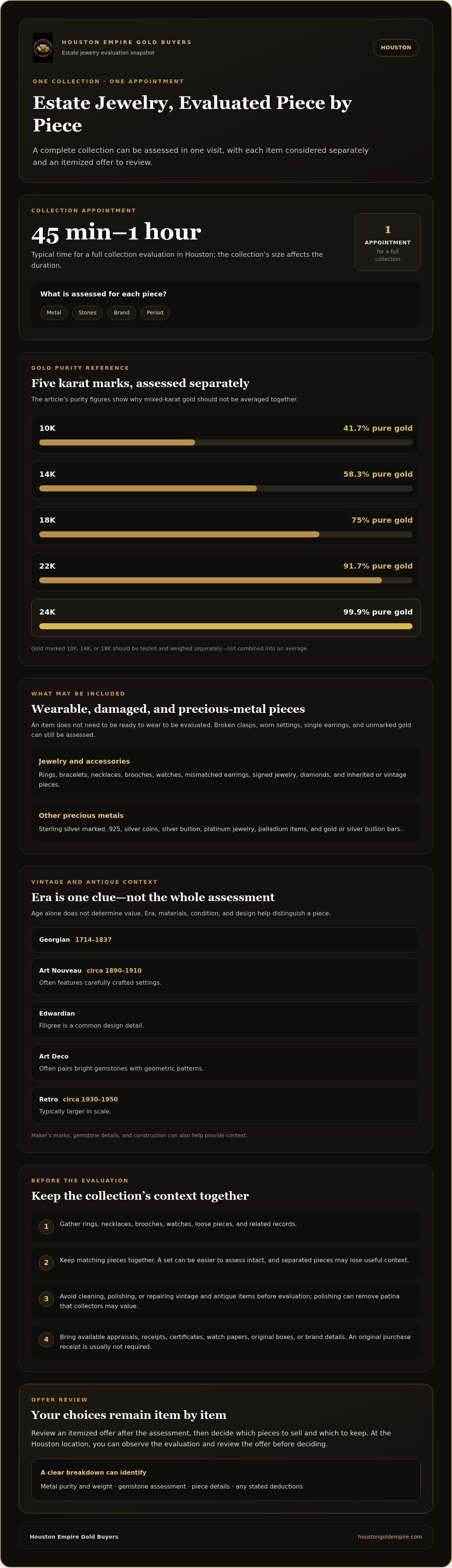
An entire estate jewelry collection can be evaluated in one appointment. A full collection evaluation in Houston typically takes 45 minutes to an hour, depending on its size. Each piece can be assessed separately, and you can decide what to sell after reviewing an itemized offer.
It’s reasonable to want clarity before parting with inherited or vintage pieces. If you plan to sell estate jewelry in Houston, this guide explains what jewelry and precious metals we evaluate, how an in-person assessment works, and what to bring. Stones, maker details, condition, and precious-metal content can all affect how a piece is evaluated.
Key Takeaways
- Gather estate jewelry, precious metals, and any related records so each item can be considered in context.
- Learn which jewelry, coins, bullion, and other precious-metal pieces may be included in an evaluation.
- Keep vintage and antique pieces in their current condition, and keep matching items together before an appointment.
- Understand how visible testing, weighing, gemstone assessment, and item details contribute to an in-person evaluation.
Can I sell an entire collection in one appointment?
Yes, a complete collection can be evaluated in one appointment. In Houston, a full collection evaluation typically takes 45 minutes to an hour, depending on its size. Each piece can be assessed separately for metal, stones, brand, and period, rather than treated as scrap. An itemized offer lets you choose which pieces to sell and which to keep.
Before visiting, gather rings, necklaces, brooches, watches, and loose pieces. Keep matching sets together, since separated pieces can lose useful context. Include newer fine jewelry as well as vintage items; age alone does not determine value. Receipts, appraisals, and brand details can help identify a piece, but Original purchase receipt is usually not required.
Houston Empire Gold Buyers purchases estate jewelry and precious metals directly. An auction house generally seeks buyers through bidding, while a pawn transaction may be a loan secured by jewelry or an outright purchase. These options differ in transaction structure and how an offer is determined. At our Houston location, you can observe the evaluation and review an offer before deciding.
Do I need to pay taxes on proceeds from selling inherited jewelry in Texas? Tax treatment depends on your circumstances and applicable rules. Keep estate records and sale documents so a tax professional can assess your situation.
To reduce scam risks, stay present while items are tested and weighed, and ask for an itemized explanation of the offer. Review the terms before agreeing, and don’t hand over jewelry without understanding whether the transaction is a sale or loan.
Broken clasps, bent settings, and single earrings can still be evaluated for their metal content. Unmarked gold also can be tested instead of judged by its appearance alone. Gold marked 10K, 14K, or 18K should be tested and weighed separately, not averaged together. Selling damaged or unmarked pieces alongside wearable jewelry can make one appointment useful for the whole collection.
Types of estate jewelry and precious metals purchased
Estate jewelry evaluations can include wearable fine jewelry, damaged pieces, and precious-metal items. Examples include rings, bracelets, necklaces, brooches, watches, and mismatched earrings. A piece does not need to be ready to wear to be evaluated. Broken clasps or worn settings may still contain precious metal, while stones and design can also affect an item’s assessment.
Gold jewelry is commonly marked by karat. The purity figures help explain why gold pieces should be assessed separately: 10K contains 41.7% pure gold, 14K contains 58.3%, 18K contains 75%, 22K contains 91.7%, and 24K is described as 99.9% pure. Sterling silver marked .925, silver coins, silver bullion, platinum jewelry, and palladium items are other precious-metal examples.
Collections may also include signed jewelry, diamonds, and watches. A maker’s mark can help identify a signed piece, while gemstone type, condition, and setting are considered in its assessment. Bring a branded ring or diamond pendant with any available paperwork. Gold and silver coins or bullion bars can be evaluated separately from jewelry.
Some jewelers may structure a transaction as a direct purchase or as trade-in credit toward another jewelry purchase. Ask which type of offer is being made, and compare the written breakdown, including metal, stones, and any deductions. Before agreeing, clarify whether any service or transaction fee applies. This keeps the amount offered distinct from any credit tied to buying another item.
How do I compare offers and negotiate the best price for estate jewelry? If you plan to sell estate jewelry in Houston, compare itemized offers by piece, checking metal purity, weight, gemstone assessment, and stated deductions. Point out signed marks, matching components, or included paperwork that may help explain an item’s details.
For a collection with mixed metals, ask for separate evaluations rather than one combined scrap figure. When you sell estate jewelry in Houston, review how the evaluation distinguishes a gold bracelet, a sterling silver serving piece, and a diamond ring. Separate assessments make each item’s contribution clearer and help you decide what to include in a sale.
Vintage, antique, and inherited jewelry
Age and family history can offer useful context, but neither alone establishes a piece’s value. Era, materials, condition, and design all help distinguish a vintage or antique item.
Vintage and Antique Jewelry
Vintage jewelry can span several decades and design eras. Georgian pieces date from 1714-1837, while Victorian jewelry reflects Queen Victoria’s changing tastes. Art Nouveau jewelry, circa 1890-1910, often features carefully crafted settings. Edwardian designs commonly use filigree, and Art Deco pieces often pair bright gemstones with geometric patterns. Retro jewelry, circa 1930-1950, is typically larger in scale. Look for era-specific details, maker’s marks, gemstones, and construction.
Inherited Estate Jewelry
An inherited engagement ring, brooch, or watch may hold family meaning as well as material value. Keep matching pieces together, since a jewelry suite can be easier to assess intact. Avoid cleaning, polishing, or repairing items before evaluation; polishing can remove patina that collectors may value. Gather available appraisals, receipts, certificates, watch papers, and original boxes. These records can help explain a piece’s maker, materials, or history.
Finding Houston Estate Jewelry Buyers
Where can I sell estate jewelry in Houston? Visit Houston Empire Gold Buyers for an in-person evaluation of estate jewelry and precious metals. We test and weigh items in front of you, explain the assessment, and make a direct offer with no obligation to sell. Which Houston estate jewelry buyers have the best reviews? When comparing customer feedback, look for comments about visible testing, clear explanations, and transparent offers rather than relying on a rating alone.
Bring the collection as found, including loose components and papers. A non-running mechanical watch may still have resale value because its movement can be repaired. Share any known history, but let details such as period, setting, and condition guide the evaluation. Keeping an Art Deco brooch or Victorian necklace intact preserves the context that helps explain its design.
Appointment and in-person valuation process
An in-person appointment lets you observe the examination of your pieces. Prepare documents and questions so the evaluation covers the collection clearly.
Booking an In-Person Appointment
Gather the jewelry and any related records before visiting. Appraisals, receipts, gemstone certificates, watch papers, and original boxes can add useful context. Bring the pieces as found, including loose components, rather than separating them by metal or style. Mention unusual items, such as custom earrings or a watch with missing parts, so they receive attention during the visit.
During the evaluation, ask to watch each piece being tested and weighed. XRF analysis helps assess metal composition, while certified digital scales measure weight. Gemstones are evaluated separately because they may affect an estate jewelry offer. Ask how the evaluator distinguishes metal value from stones, design, maker, or condition. An itemized explanation makes it easier to understand the assessment before deciding what to sell.
Estimating Jewelry Value Before Selling
How can I estimate the value of estate jewelry before selling? Start by noting marks, materials, gemstones, condition, and any identifying paperwork. A karat stamp can indicate gold purity, while a maker’s mark or certificate may help identify a signed piece. These clues can help you prepare questions, but an in-person test and weight provide essential details for a metal assessment.
For a preliminary review, group pieces by type and note visible markings. Record whether a ring has a stone, whether a necklace is marked, and whether earrings form a matching pair. Compare these details with available appraisals or receipts, but treat an old appraisal as background rather than a current offer. Metal content, weight, gemstones, brand, and condition all shape the evaluation.
During your visit, follow the evaluation step by step: observe testing, review the recorded weight, and ask how each piece contributes to the offer. This helps you compare an engagement ring, a custom pendant, and loose earrings on their individual details instead of relying on one estimate for the entire collection.
Houston Empire Gold Buyers: Gold Jewelry (10k - 24k)
Houston Empire Gold Buyers is a trusted local destination for evaluating estate jewelry. We purchase estate pieces and gold jewelry in 10K, 14K, 18K, 21K, 22K, and 24K, along with gold coins and bullion and silver jewelry and bullion. Our offers are competitive and based on live market pricing.
We explain the offer clearly, with no middlemen or hidden fees. Same-day cash payouts are available when you accept an offer. Walk-ins are always welcome. Walk-in Hours: Mon to Sun from 7:00 AM to 10:00 PM.
Bring the pieces you’re considering to Houston Empire Gold Buyers for an in-person evaluation. We use advanced XRF technology and certified precision scales. No pressure, no obligation to sell.
Choose Your Next Step With Confidence
Before you sell, decide which pieces you’re ready to part with and which carry personal meaning. That distinction can help you approach an estate jewelry transaction with a clear purpose, rather than feeling pressured to make a decision about everything at once.
If you’re prepared to sell estate jewelry in Houston, bring your questions and take time to understand the proposed transaction. You can review the evaluation, consider your options, and choose whether moving forward feels right for you. A thoughtful decision matters as much as the assessment itself.
We welcome questions from Houston families considering a sale. Contact us when you’re ready to discuss your next step.
Take it one piece at a time. You can move forward at your own pace.
Frequently Asked Questions
Can I sell part of a collection and keep the rest?
Yes. You can choose which pieces to sell and retain others. Before the evaluation, separate items you already know you want to keep, such as a family engagement ring, from those you’re considering selling. This helps you communicate your preferences clearly. You can review each offer before deciding, without treating the entire inherited collection as one all-or-nothing transaction.
How long does evaluating a full collection take?
A full estate collection in Houston typically takes 45 minutes to an hour, depending on its size. Our evaluations can be completed in about 10 to 20 minutes, though a large collection may take longer than an evaluation of fewer items. Numerous pieces, gemstones, or watches can require more attention, so the collection’s size and contents affect the time needed.
Is there any cost for the evaluation?
No middlemen or hidden fees. No pressure, no obligation to sell. You can review the offer and its terms before deciding, and ask us to explain how it applies to the specific items you’re considering. That gives you room to make an informed decision rather than feeling committed simply because you brought jewelry in for evaluation.
Should I sort or appraise an inherited collection before selling?
You don’t need to sort an inherited collection into metal types first. Keep matching sets together and bring available records, such as receipts or certificates. An existing appraisal can offer background, but it isn’t a substitute for evaluating the actual items. Avoid polishing or repairing pieces beforehand, especially if they have distinctive finishes or visible signs of age.
What if I am handling an estate for someone else?
If you’re managing jewelry for another person or an estate, first establish who has authority to make decisions about the items. Keep estate paperwork and records identifying the jewelry together, and note which pieces are disputed or designated for family members. Don’t agree to sell items until you’re authorized to do so. Clear records can help prevent confusion about ownership and sale decisions.
What if some of the jewelry is not worth much?
A piece that looks modest may still contain precious metal, while a decorative item may have little resale value. Don’t assume based on appearance alone. Ask us to explain each item’s assessment, and consider whether sentimental value outweighs an offer. You can decide piece by piece, including whether to keep lower-offer items or sell only selected parts of the collection.


