
A broken clasp or snapped chain doesn’t automatically erase a piece’s value. Whether you have broken jewelry, its scrap value generally depends on the precious metal, its purity, and the amount of that metal by weight, not whether the piece is wearable. Damage and age matter more when considering resale or repair value.
It’s reasonable to wonder whether a worn, incomplete, or damaged item is worth selling. The key is understanding what the metal contributes and what other features may affect its evaluation. This guide explains how wear and age can shape a piece’s value, how gold content and weight affect scrap value, and what to consider before deciding to sell or repair broken jewelry in Houston, including Spring Branch, Katy, Cypress, and Memorial.
Key Takeaways
- Look for loose stones, worn prongs, weak clasps, and thin links to assess whether damage may affect repair or resale decisions.
- Compare a piece’s sentimental and potential repair value with the worth of its precious metal before deciding what to do with it.
- Understand how metal purity and the weight of precious-metal components shape scrap value.
- Use stamps as clues, but remember that a missing mark doesn’t settle whether a piece contains precious metal.
1. Wear and age-related jewelry damage
Daily wear can loosen prongs, stretch chain links, and weaken clasps. Check a diamond ring for a stone that shifts or prongs that snag fabric. On a necklace, inspect the clasp, links, and bail, the loop holding its pendant. A clasp that won’t close or a thin, stretched link can fail during wear. A chain worn for 20 years may show fatigue and eventually break. Scratches, dents, cracks, and discoloration can also point to damage or worn plating.
Don’t keep wearing damaged jewelry just because it still looks intact. A loose diamond may fall out after a bump, while worn prongs can break and leave the setting unable to hold the stone. A weak clasp can open without warning. Take off jewelry with loose stones, bent bands, cracked settings, or thin links, then place each piece in a separate pouch so it won’t snag or rub against another item. Keep small parts, such as a detached earring back, with the matching piece.
Some damage can be repaired. A jeweler can solder a broken chain, replace a faulty clasp, reset or replace a missing gemstone, or restring a broken pearl strand. Weigh repair against the piece’s sentimental value and likely future use. If an original design is meaningful but no longer wearable, repurposing may preserve part of it. For example, a single earring can become a pendant, or a chain can be shortened into a bracelet. A diamond from a damaged ring may also be reset.
For safe storage, place broken jewelry in a labeled, secure pouch or box, keeping loose stones and components together. Don’t put a potentially valuable gold, silver, or platinum piece in household trash; consider repair, repurposing, or selling it instead. If selling is the next step, this guide to where to sell gold jewelry in Houston explains a local option.
2. Selling precious-metal jewelry for scrap value
Scrap value focuses on recoverable precious metal, not whether a bracelet suits everyday wear. Broken gold, silver, or platinum jewelry can be valued by metal weight and market value. Whether you have broken jewelry to sell or repair, compare the potential repair value with the item’s metal value, sentimental importance, and likely future use. A damaged setting or missing stones don’t automatically erase the value of its remaining precious metal.
Selling may make sense when a clasp, setting, or band is too damaged for repair to be worthwhile. It may also suit a design you no longer wear or a piece with little sentimental meaning. An heirloom with strong personal significance may be worth restoring or redesigning instead. Consider each item individually. Whether you have broken jewelry or an intact piece, its usefulness, personal meaning, and precious-metal content can point toward different choices.
Prepare pieces gently before an evaluation. Wipe metal and gemstones with a soft cloth, or use mild soap and warm water. Avoid aggressive polishing and chemical cleaners. Leave gemstones in place until the entire item has been examined. Removing a loose stone yourself could damage its setting or separate a component. Gather detached parts, such as a broken clasp, and keep them with the matching item.
Selling and trading precious metals are different choices. A sale exchanges an item for payment; a trade-in applies its value toward another purchase. Scrap evaluation focuses on precious-metal content, weight, and market value. Repair or redesign considers whether the existing piece can be restored or reused. For a gold item, these steps for selling gold jewelry can help you prepare questions before making a decision.
Repair and replacement decisions can depend on both sentimental and financial value, so weigh what the piece means to you against its worth. When repair costs exceed the item’s value, selling broken jewelry may make more sense. High repair costs combined with little emotional attachment may further favor selling.
For jewelry you plan to sell or donate, gently wipe metal and gemstones with a soft cloth. A mild soap and warm water solution is also suitable for gold, silver, and platinum. Broken gold doesn’t need aggressive polishing or chemical cleaning before an evaluation.
3. Weight and gold content
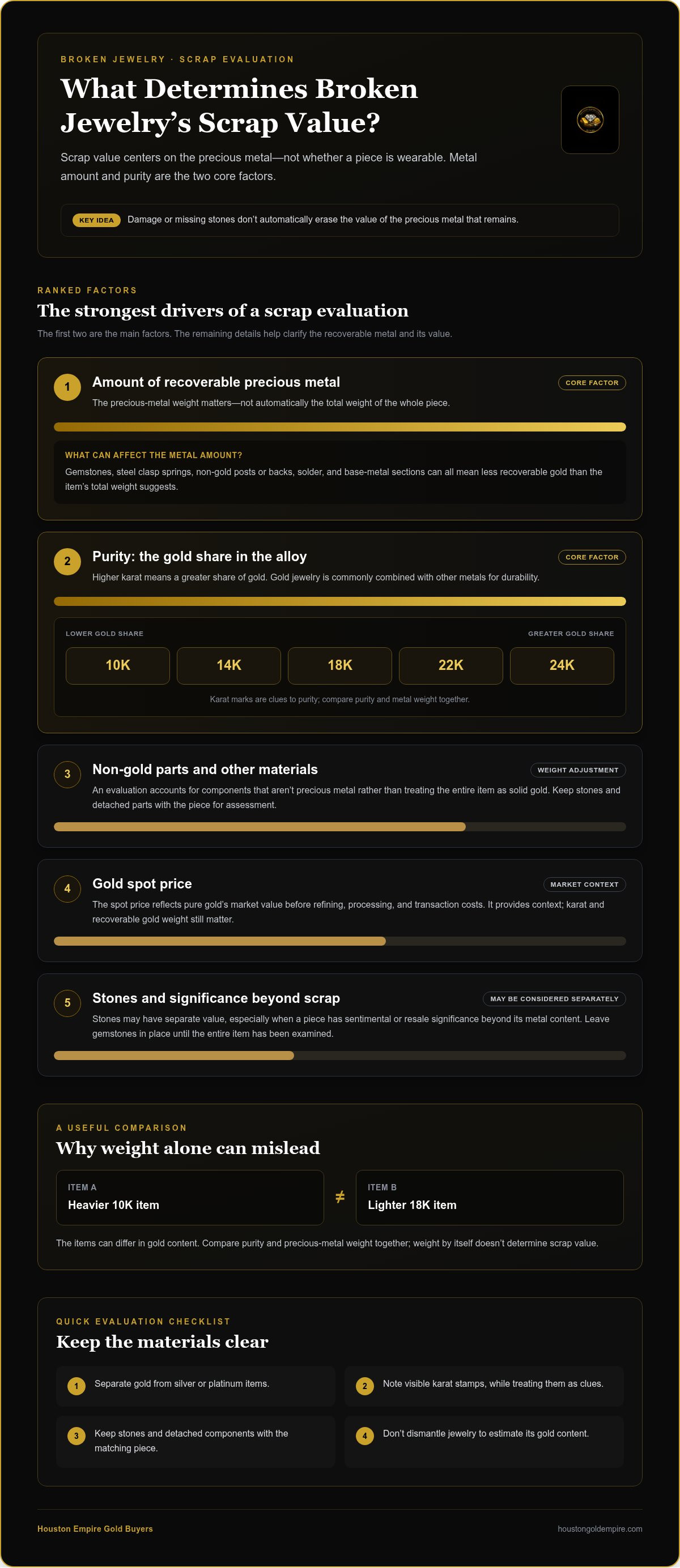
Gold scrap value reflects two main factors: the amount of gold in an item and its purity. Jewelry karat marks include 10K, 14K, 18K, 22K, and 24K. Higher karat means a greater share of gold in the alloy. Pure gold is soft, so gold jewelry is commonly combined with other metals for durability. Two rings with identical weight can therefore contain different amounts of gold.
The total item weight isn’t automatically the gold weight. A necklace may include a gemstone, steel clasp spring, non-gold posts or backs, solder, or base-metal sections. These components affect how much precious metal the piece contains. An evaluation accounts for these materials rather than treating the entire item as solid gold. Stones may also have separate value, especially when a piece has sentimental or resale significance beyond its metal content.
Market pricing matters, too. The gold spot price represents pure gold’s market value before refining, processing, and transaction costs. It provides context for valuation, but a piece’s karat and recoverable gold weight also matter. For example, a heavier 10K item and a lighter 18K item can differ in gold content, so weight alone doesn’t determine scrap value. Compare purity and metal weight together.
Before an evaluation, keep stones, settings, and detached components with the jewelry. Don’t remove prongs or dismantle a piece to estimate its gold content, since that can make sentimental jewelry more difficult to assess as a whole. Cleaning won’t change the item’s karat or metal weight, and aggressive polishing isn’t needed. Separate gold pieces from silver or platinum items, then note any visible karat stamps. This simple preparation helps keep each metal’s weight and purity clear.
Explore gold-selling options in Houston
High material value often justifies repairing jewelry, so a damaged piece may merit consideration as a repair rather than only for its scrap metal. Gold jewelry purity is commonly marked in karats, including 10K, 14K, 18K, 22K, and 24K. These marks can provide a starting point when considering the item’s material value and condition together.
4. How can you tell whether broken jewelry is made of real gold, silver, or gemstones?
Begin with the marks stamped on a clasp, ring band, or pendant. Gold purity may appear as a karat mark or a three-digit stamp: 10-karat gold may read 417, 14-karat 585, 18-karat 750, and 22-karat 916. These markings offer useful clues, but they don’t establish a piece’s full composition. Check several areas, especially if the item has been repaired or includes separate metal components.
Look for GP, GEP, or HGE, which may mark gold-plated jewelry. GF and RGP may identify gold-filled or rolled-gold pieces. These marks indicate a different construction from solid gold, so don’t treat a gold-colored surface as proof of gold content. A missing karat stamp also doesn’t necessarily mean the jewelry isn’t gold. Clasps, solder, posts, and decorative sections may use other metals, even within one piece.
Sterling silver is commonly marked .925. For gemstones, appearance alone can’t reliably establish identity or value, especially when a stone is loose, chipped, or mounted in a damaged setting. The Mohs hardness scale runs from 1 to 10. Ruby and sapphire, both corundum, rank nine; emeralds, garnets, pearls, and opals score 8 or lower. Hardness is one clue, not a complete gemstone identification.
Keep stones and detached parts with the jewelry, then compare visible stamps with the item’s construction. Avoid scratching, bending, or applying household chemicals as a home test. These steps can damage metal or gemstones without confirming their composition. A professional evaluation can examine the item’s metal content and distinguish precious-metal components from base-metal parts. XRF analysis is one method used to assess metal composition. The results help clarify whether a broken gold, silver, or platinum item contains precious metal, even when its marks are worn or absent.
Make a Clear, Confident Next Move
Deciding whether you have broken jewelry worth selling comes down to what you want from it now. You may want to keep a meaningful piece, recover value from unused metal, or make an informed choice before letting it go. Choose the outcome that fits your priorities, then take the next step with a clear understanding of what matters to you.
We’re Houston’s trusted number one local gold buyers. At Houston Empire Gold Buyers, we purchase gold jewelry from 10k to 24k, gold coins and bullion, and silver jewelry and bullion. We test items in front of you, explain the evaluation, pay cash, and charge no hidden fees. Bring your questions and see the process for yourself.
Your broken jewelry may still hold value. Take the next step with confidence.
Frequently Asked Questions
What should you do with broken jewelry?
Stop wearing the piece, photograph it and any detached parts, then store them together in a labeled, closed container. Keep the container somewhere secure, especially if it holds small stones or earring backs that are easy to misplace. If you’re sorting several items, record which components belong together. This simple inventory helps you keep track of pieces before deciding whether to retain or sell them.
Can you sell broken gold or silver jewelry, and how much is it worth?
Yes. Broken gold or silver jewelry can be sold, and the amount depends on its metal content, purity, recoverable weight, and market value. A missing component doesn’t automatically remove the value of the remaining precious metal. The amount varies by piece and is provided after a quote request; key factors include purity, recoverable weight, and market value. We use advanced XRF technology and certified precision scales for evaluations.


