Mailing your family heirlooms to an out-of-state online buyer is often the riskiest way to get paid for your precious metals. You've likely spent years holding onto sterling flatware or jewelry, only to feel overwhelmed by the fear of being undervalued. Many owners hesitate to sell sterling silver because they're confused by "925" markings versus silver plating. It's frustrating to watch silver prices climb while your assets sit in a drawer because you don't trust the appraisal process.
You can turn those items into immediate liquidity by choosing a transparent, local partner that prioritizes accuracy and fair market value. You deserve to watch the testing process. You should receive a payout based on current June 2026 spot prices. This guide explains how to identify authentic hallmarks, why local XRF testing beats online matching services, and how to find the best payouts in the city. Stop guessing about the value of your collection and start making informed financial decisions today.
Key Takeaways
- Learn how to identify the "925" hallmark and other purity markings to confirm your items are genuine sterling silver rather than silver-plated.
- Understand why local precious metal buyers offer a faster, more secure way to sell sterling silver for immediate cash compared to online services.
- Discover the exact process professional buyers use to calculate payouts based on live silver spot prices and precise metallurgical purity.
- Prepare your collection for appraisal by organizing items into categories and avoiding common cleaning mistakes that can impact value.
- See how advanced XRF technology provides a transparent and accurate verification of your silver assets right in front of you.
Identifying Real Sterling Silver Before You Sell
Check your cabinets for hidden assets. Verify your collection before you sell sterling silver to ensure a fast, accurate transaction. What is Sterling Silver? It's a specific alloy containing 92.5% pure silver and 7.5% other metals, typically copper. This composition provides the durability needed for functional items like forks and jewelry while maintaining high precious metal value. Pure silver is too soft for daily use, so this 92.5% standard is the benchmark for quality worldwide.
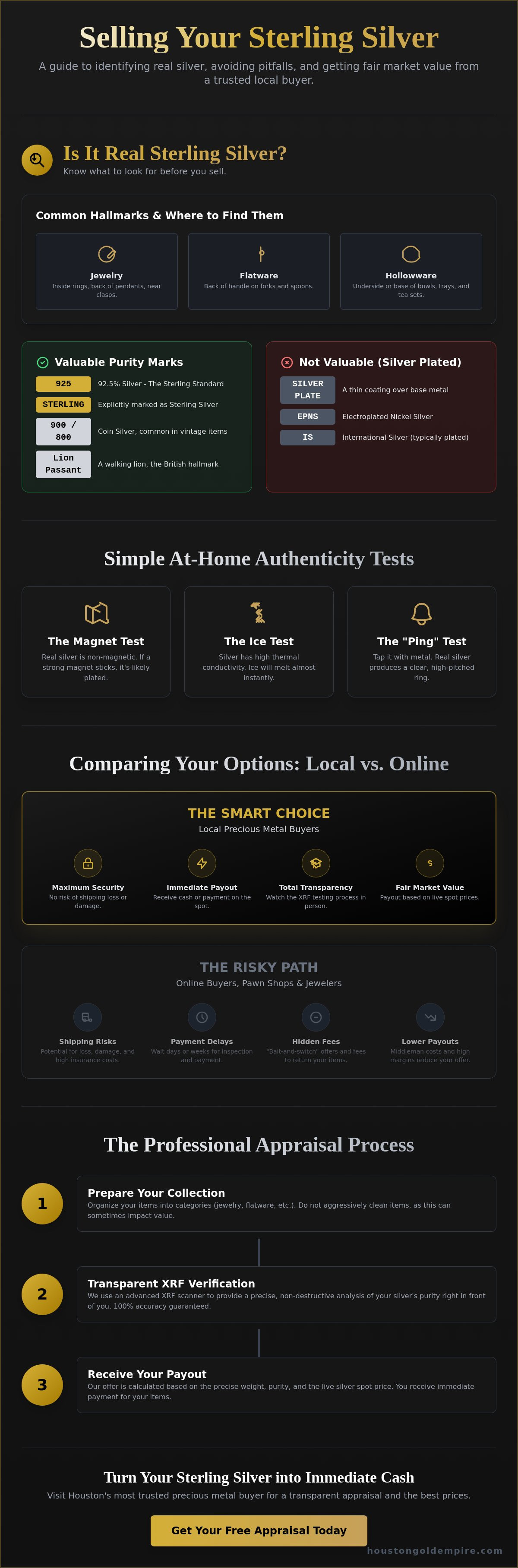
Not every shiny object in your home is valuable. Items marked with "Silver Plate," "EPNS" (Electroplated Nickel Silver), or "IS" (International Silver) do not have melt value. These pieces consist of a thin silver coating over a base metal like brass or copper. We don't buy silver-plated items because the silver content is too low to refine profitably. Focus your efforts on pieces with clear purity stamps. Identifying these marks early saves you time and prevents disappointment during your appraisal.
The Most Common Hallmarks to Look For
Look for the "925" or "Sterling" stamp first. This is the primary indicator of authenticity. You can usually find these marks in specific locations:
- Jewelry: Check the inside of ring bands, the back of pendants, or the small metal tags near necklace clasps.
- Flatware: Look at the back of the handle on spoons and forks.
- Hollowware: Inspect the underside or base of trays, bowls, and tea sets.
Don't ignore international markings. You may find "800" or "900" stamps on European or vintage items. These are "coin silver" standards. While slightly lower in purity than sterling, they still hold significant value. British pieces often feature a "Lion Passant" hallmark, which is a small stamp of a walking lion. These historical marks are reliable indicators of silver content.
Simple At-Home Tests for Authenticity
Use the magnet test as your first line of defense. Real silver is non-magnetic. If a strong magnet sticks to your item, it's likely a plated base metal. Next, try the ice test. Silver has the highest thermal conductivity of any metal. Place a cube of ice directly on a silver spoon or tray. It should begin melting almost instantly, much faster than it would on a room-temperature surface. You'll feel the metal get cold very quickly.
Finally, perform the "Ping" test on coins or flatware. Gently tap the item with another piece of metal. Authentic silver produces a clear, high-pitched ringing sound that lingers. Base metals or plated items usually result in a dull, short thud. These tests help you filter your items before you sell sterling silver, but a professional XRF scan is the only way to guarantee 100% accuracy.
Comparing Your Options: Local Houston Buyers vs. Online Services
Choosing where to sell sterling silver requires balancing speed against potential returns. National online matching services target collectors looking for specific, pristine patterns. They often promise premiums that don't apply to the average household collection. For most sellers, the risks of mailing heirlooms outweigh the benefits. You face transit delays and potential loss. Local Houston buyers prioritize the intrinsic metal value. This ensures a faster, more predictable transaction for scrap, broken jewelry, or standard flatware sets.
Skip the traditional jewelry store. Most retailers aren't equipped to refine precious metals. They buy your items and flip them to a wholesaler for a quick profit. This "middleman" fee comes directly out of your payout. Pawn shops are another common option, but their business model relies on high-interest loans and steep margins. They typically offer the lowest percentages of the live spot price. Specialized precious metal dealers operate differently. They focus on volume and direct refining relationships. This allows them to offer competitive rates that retail stores simply can't match.
The Pros and Cons of Mailing Your Silver
Shipping your silver across the country is a gamble. You must pay for secure packaging and expensive insurance. Transit times can stretch for days. Once the items arrive, some online buyers use aggressive "bait-and-switch" tactics. They provide a high initial estimate over the phone but lower it significantly after a physical inspection. If you reject the offer, you may have to pay a fee to get your items back. Reviewing consumer protection for selling precious metals helps you spot these red flags. Local transparency always beats a distant, email-based quote.
Why Local Houston Walk-Ins Offer Better Security
Visit a local office in Houston, Katy, or West Chase for a superior experience. You get to see your silver weighed on certified digital scales. This ensures you're paid for every gram of material. Professional dealers use X-ray fluorescence (XRF) technology to verify purity without damaging your items. You receive a cash offer on the spot. There's no waiting for a check to clear or a bank transfer to process. This direct interaction builds trust and allows you to verify the buyer's credentials in person. If you're ready for a clinical, no-nonsense evaluation, find a local silver buyer who values your time and your assets.
How Professional Buyers Calculate Sterling Silver Value
Professional buyers don't guess. They use a clinical, math-based approach to determine the exact value of your assets. When you prepare to sell sterling silver, you must understand the difference between gross weight and melt value. The foundation of every offer is the silver spot price. This figure represents the live market value of .999 fine silver. As of June 19, 2026, the spot price sits between $64.90 and $67.17 per troy ounce. Because sterling is an alloy, your payout is based on the 92.5% actual silver content within the piece.
Precision is vital in this industry. Most household scales measure in standard ounces, but precious metals are traded in troy ounces. One troy ounce equals 31.1 grams. If a buyer uses standard ounces (28.35 grams), you are losing nearly 10% of your value before the appraisal even begins. Reliable dealers always use certified digital scales calibrated to the troy system. This ensures you receive credit for every fraction of a gram. Knowing how to value your sterling silver involves verifying these measurements yourself before visiting a showroom.
The Math Behind Your Cash Offer
You can calculate a baseline for your payout using a simple industry formula. Take the weight of your items in grams and divide by 31.1 to find the troy weight. Multiply that result by 0.925 to account for the silver purity. Finally, multiply by the current spot price and the buyer's payout percentage. 1 Troy Ounce equals 31.1 grams. Buyers retain a small percentage of the total melt value to cover refining costs, insurance, and business overhead. A transparent buyer will disclose this percentage upfront so there are no surprises when it's time to sell sterling silver.
How XRF Testing Protects Your Payout
Traditional acid testing is outdated and imprecise. It requires scratching your jewelry or flatware, which can leave permanent damage. It only tests the surface layer, meaning it can miss base metals hidden inside a thick silver plating. We use X-Ray Fluorescence (XRF) spectrometry instead. This technology sends an X-ray beam through the metal to identify its exact chemical composition in seconds. It provides a non-destructive, clinical breakdown of every metal present. XRF is essential for valuing "coin silver" or international alloys that may have purity levels of 80% or 90%. You get paid for the exact purity the machine detects, ensuring total accuracy for both parties.
Preparing Your Sterling Silver Collection for Appraisal
Prepare your collection before you walk through the door. Organization accelerates the appraisal process and ensures no item is overlooked. Group your items by category. Keep jewelry, flatware, and hollowware in separate containers or bags. This modular approach allows us to move through your collection with clinical efficiency. You don't need to spend hours polishing your pieces. We prioritize the metallurgical content over the visual shine. In fact, avoid using harsh silver cleaners or abrasives. These chemicals can interfere with testing equipment and offer no benefit to your final payout.
Texas law dictates specific requirements for every transaction. You must bring a valid government-issued photo ID. All "Crafted Precious Metal Dealers" in Texas are regulated by the Office of Consumer Credit Commissioner (OCCC). We're required to maintain detailed records of every purchase for at least two years. This transparency protects the community and ensures legal compliance. Being prepared with your documentation makes the process seamless and professional.
Dealing with 'Weighted' Sterling Items
Candlesticks, salt shakers, and large trophies often carry a "Sterling Weighted" or "Weighted" stamp. These items are not solid silver. They consist of a very thin silver "skin" wrapped around a core of cement, wax, or lead. The filler provides stability and weight but holds zero precious metal value. When you sell sterling silver in this form, we must account for the weight of the non-precious reinforcement. Expect the actual silver weight to be significantly lower than the total scale weight of the item. We evaluate these pieces by focusing strictly on the silver shell to provide an honest market offer.
Organizing for a Faster Evaluation
Efficiency benefits everyone. Sort your collection by hallmark before your visit. Place all items marked "925" or "Sterling" together. If you have pieces with international marks like the British Lion Passant, keep them in a separate group. This helps us verify the purity standards quickly using our X-ray technology. Don't discard broken items. A snapped necklace or a crushed silver cup retains its full melt value. We buy scrap silver based on its weight and purity, regardless of its physical condition. Secure your large sets in a sturdy chest or lined box for safe transport to our Houston location. If you're ready for a professional assessment, bring your silver collection to us for an immediate evaluation.
Why Sell to Houston Empire Gold Buyers?
Don't risk your valuables with an anonymous online matching service. You deserve a local partner who understands the Houston market and respects your time. We provide a secure, professional environment for those who want to sell sterling silver without the stress of shipping or transit delays. Our facility serves the entire Greater Houston area, including Katy, Sugar Land, and Spring Branch. We prioritize transparency above all else. You watch every step of the process. Your items never leave your sight during the appraisal.
Precision is the core of our business. We use advanced X-ray fluorescence (XRF) technology to determine the exact metallurgical composition of your silver. This eliminates the guesswork and damage associated with traditional acid tests. You receive credit for every fraction of purity found in your items. Our certified digital scales are calibrated for accuracy and are always displayed clearly for your inspection. This commitment to modern verification methods ensures you receive a fair market offer when you decide to sell sterling silver. We believe that an informed seller is a confident seller.
Expert Appraisals in Houston and Katy
Experience the difference of working with a dedicated precious metals expert. Houston Empire Gold Buyers is the local authority for estate jewelry, scrap silver, and bullion coins. We track global market fluctuations to provide competitive offers that reflect the true value of your assets. Whether you have a single ring or a massive heirloom flatware set, we treat every transaction with the same level of professional gravity. Our team possesses the industry literacy required to evaluate complex international hallmarks and coin silver standards that general jewelry stores might miss.
A Hassle-Free, Professional Selling Experience
Selling your assets shouldn't feel like a high-pressure negotiation. We offer a clinical, straightforward evaluation in a business-like setting. There are no hidden fees or "bait-and-switch" tactics involved. You receive an immediate cash payout the moment you accept our offer. There is no waiting for checks to clear or bank transfers to process. This speed is essential for those who value their time and need liquidity now. Our deep roots in the community mean we value our reputation as a reliable guide above all else. Visit us today for a free professional evaluation of your sterling silver. Walk in with your collection and walk out with the cash you deserve.
Maximize Your Silver Value Today
You now have the tools to navigate the precious metals market with confidence. Identifying real "925" hallmarks and organizing your collection are the first steps toward a successful transaction. Professional XRF testing is the only way to guarantee you're paid for every fraction of purity. Local transparency beats the risks and delays of mailing your items to distant buyers. You can avoid the middleman fees of retail jewelry stores and the low offers of pawn shops by choosing a specialized dealer.
If you're ready to sell sterling silver, visit our experts for a clinical and fair appraisal. We use advanced XRF testing technology and certified digital scales to ensure total accuracy. Our team serves the Houston, Katy, and Sugar Land communities with a commitment to immediate results. We prioritize your security and offer a no-pressure environment for your evaluation.
Get an Immediate Cash Offer for Your Sterling Silver Today. Turn your unused flatware and jewelry into immediate liquidity and enjoy the security of a professional, local partnership. We look forward to helping you unlock the true value of your collection.
Frequently Asked Questions
Is sterling silver worth selling if it's tarnished or broken?
Yes, tarnished or broken silver retains its full intrinsic melt value. We evaluate items based on their metallurgical weight and purity rather than their aesthetic condition or functionality. A snapped necklace or a black, oxidized tray still contains 92.5% pure silver. Our refining process removes all surface impurities, so you don't lose money for damage or lack of polish.
How much is 925 sterling silver worth per gram right now?
The value per gram fluctuates daily based on the global commodities market. To find the current rate when you sell sterling silver, we multiply the live spot price by 0.925 and divide by 31.1 grams. As of June 19, 2026, silver trades between $64.90 and $67.17 per troy ounce. We use these real-time figures to ensure your payout reflects the most accurate market conditions available.
What is the difference between sterling silver and silver plate?
Sterling silver is a solid alloy containing 92.5% silver throughout the entire piece. Silver plate is merely a thin layer of silver electroplated over a base metal like copper, brass, or nickel. While sterling has high market value, silver plate has no melt value because the silver content is too low to refine profitably. Always look for "925" or "Sterling" stamps to confirm your items are solid.
Do I need an appointment to sell my silver in Houston?
No appointment is necessary for a professional evaluation at our showroom. We operate as a local neighborhood service and welcome walk-in customers during our standard business hours. Our testing process is designed for maximum efficiency, allowing you to get a cash offer in minutes. Simply bring your collection and a valid ID to receive an immediate, clinical appraisal of your assets.
Will a silver buyer pay more for antique patterns?
Most precious metal buyers pay based on the silver's weight and purity rather than the artistic pattern or brand name. While some antique patterns are rare, the secondary market for sterling flatware is heavily driven by industrial melt value. Selling for the silver content is the fastest path to liquidity. We focus on providing the highest possible percentage of the silver spot price for all sterling forms.
Can I sell silver coins and bullion at the same time as jewelry?
You can sell silver coins, bullion, and jewelry in a single, streamlined transaction. We buy all forms of silver, including 90% "junk" silver coins, .999 fine bullion bars, and sterling silver jewelry. Grouping these items together simplifies the process and allows for a comprehensive payout. Each category is tested and weighed individually to ensure you receive the correct rate for each specific purity level.
How do I know if my silver candlesticks are 'weighted'?
Check the bottom of the item for stamps like "Weighted," "Reinforced," or "Filled." These pieces usually have a thin silver exterior wrapped around a heavy core of wax, cement, or lead for structural stability. You can often identify them by the weight distribution; if the base feels disproportionately heavy, it's likely weighted. We deduct the weight of these non-precious fillers during the appraisal process.
What documents do I need to bring to sell silver in Texas?
You must bring a valid government-issued photo ID to complete any precious metal transaction in Texas. This is a mandatory legal requirement for all dealers registered with the Office of Consumer Credit Commissioner (OCCC). Acceptable documents include a state-issued driver's license, a US passport, or a military ID. These records ensure the transparency and legality of the secondary precious metals market.


